
ทำไมคำศัพท์ IELTS จึงสำคัญ
คำศัพท์คิดเป็น 25% ของคะแนน IELTS ในทั้งการเขียนและพูด คำศัพท์ที่แข็งแกร่งช่วยให้คุณแสดงความคิดอย่างแม่นยำ หลีกเลี่ยงการทำซ้ำ และสาธิตทักษะภาษาทางวิชาการที่จำเป็นสำหรับ Band 7+
รายการคำศัพท์ทางวิชาการ
รายการคำศัพท์ทางวิชาการ (AWL) ประกอบด้วย 570 ครอบครัวคำที่ปรากฏบ่อยในข้อความทางวิชาการ การเชี่ยวชาญคำเหล่านี้จะช่วยปรับปรุงความเข้าใจการอ่านและความสง่างามในการเขียนอย่างมาก
ครอบครัวคำศัพท์ทางวิชาการที่ควรเรียน
เคล็ดลับการเรียน
- • เรียนครอบครัวคำไม่ใช่คำเดียว
- • เรียนคำในบริบทไม่ใช่แยกกัน
- • ฝึกใช้คำในประโยค
- • ตรวจสอบอย่างสม่ำเสมอด้วยการทบทวนเว้นระยะ
พื้นที่หัวข้อที่จำเป็น
IELTS ครอบคลุมหัวข้อที่หลากหลาย สร้างคำศัพท์ในพื้นที่หลักเหล่านี้:
การศึกษา
curriculum, assessment, pedagogy, methodology, academic achievement, lifelong learning
สิ่งแวดล้อม
sustainability, conservation, biodiversity, renewable energy, climate change, ecological footprint
เทคโนโลยี
innovation, artificial intelligence, digital transformation, cybersecurity, automation, technological advancement
สุขภาพ
healthcare, medical treatment, prevention, diagnosis, public health, mental wellbeing
สังคมและวัฒนธรรม
social cohesion, cultural diversity, demographic change, urbanization, globalization, social welfare
คำผสมและวลี
คำผสมคือคำที่เกิดขึ้นตามธรรมชาติร่วมกัน การใช้พวกมันทำให้ภาษาอังกฤษของคุณฟังดูเป็นธรรมชาติและสง่างามยิ่งขึ้น
คำผสมกริยา+นาม
คำผสมคุณศัพท์+นาม
วลีทางวิชาการ
คำพ้อง Band 7+
ใช้คำพ้องเพื่อหลีกเลี่ยงการทำซ้ำ ทางเลือกเหล่านี้ปรับปรุงภาษาของคุณ:
คำทั่วไปสู่คำทางวิชาการ
กลยุทธ์การเรียน
การเรียนคำศัพท์อย่างมีประสิทธิภาพต้องการแนวทางเป็นระบบ:
การเรียนในบริบท
เรียนคำในบริบทไม่ใช่แยกกัน:
- อ่านบทความทางวิชาการและจดคำใหม่
- เรียนประโยคตัวอย่างไม่ใช่เพียงคำจำกัดความ
- เรียนรู้ว่าคำเชื่อมโยงกับแนวคิดอย่างไร
- ฝึกใช้คำในสถานการณ์จริง
การทบทวนเว้นระยะ
ตรวจสอบคำด้วยช่วงเวลาที่เพิ่มขึ้น:
- ตรวจสอบคำใหม่หลังจาก 1 วัน 3 วัน 1 สัปดาห์ 2 สัปดาห์
- ใช้ไพ่คำหรือแอปคำศัพท์
- ทดสอบตัวเองอย่างสม่ำเสมอ
- มุ่งเน้นคำที่ยังลำบาก
การใช้งานแบบใช้งานจริง
ใช้คำศัพท์อย่างแข็งขันเพื่อรักษา:
- เขียนประโยคด้วยคำใหม่
- ฝึกพูดด้วยคำศัพท์ใหม่
- สร้างเว็บคำศัพท์เพื่อแสดงการเชื่อมต่อ
- สอนคำให้ผู้อื่น
ข้อผิดพลาดทั่วไป
หลีกเลี่ยงกับดักคำศัพท์เหล่านี้:
ใช้คำอย่างไม่ถูกต้อง
อย่าใช้คำที่คุณไม่เข้าใจอย่างสมบูรณ์ ตรวจสอบการใช้และคำผสมก่อนใช้
ใช้คำที่ซับซ้อนมากเกินไป
คำที่ซับซ้อนไม่ได้หมายความว่าดีเสมอไป ใช้คำอย่างเหมาะสมตามบริบท
ละเลยรูปแบบคำ
เรียนครอบครัวคำ (นาม กริยา คุณศัพท์ กริยาวิเศษณ์) เพื่อใช้คำอย่างยืดหยุ่น
ไม่เรียนคำผสม
คำไม่มีอยู่แยกกัน เรียนว่าคำใดเกิดขึ้นตามธรรมชาติร่วมกัน
ประโยชน์ข้อเสนอแนะจาก AI
การฝึกคำศัพท์ที่ขับเคลื่อนด้วย AI ของ LingoForge ให้ข้อเสนอแนะทันทีและเป็นส่วนตัว:
การให้คะแนนทันที
รับข้อเสนอแนะทันทีเกี่ยวกับการใช้คำศัพท์พร้อมคำอธิบายโดยละเอียด
การวิเคราะห์ข้อผิดพลาด
ระบุช่องว่างคำศัพท์และรับข้อเสนอแนะการปรับปรุง
วิธีฝึก
วิธีฝึก IELTS Vocabulary กับ LingoForge
3 ขั้นจากรายการคำสู่ความเชี่ยวชาญ
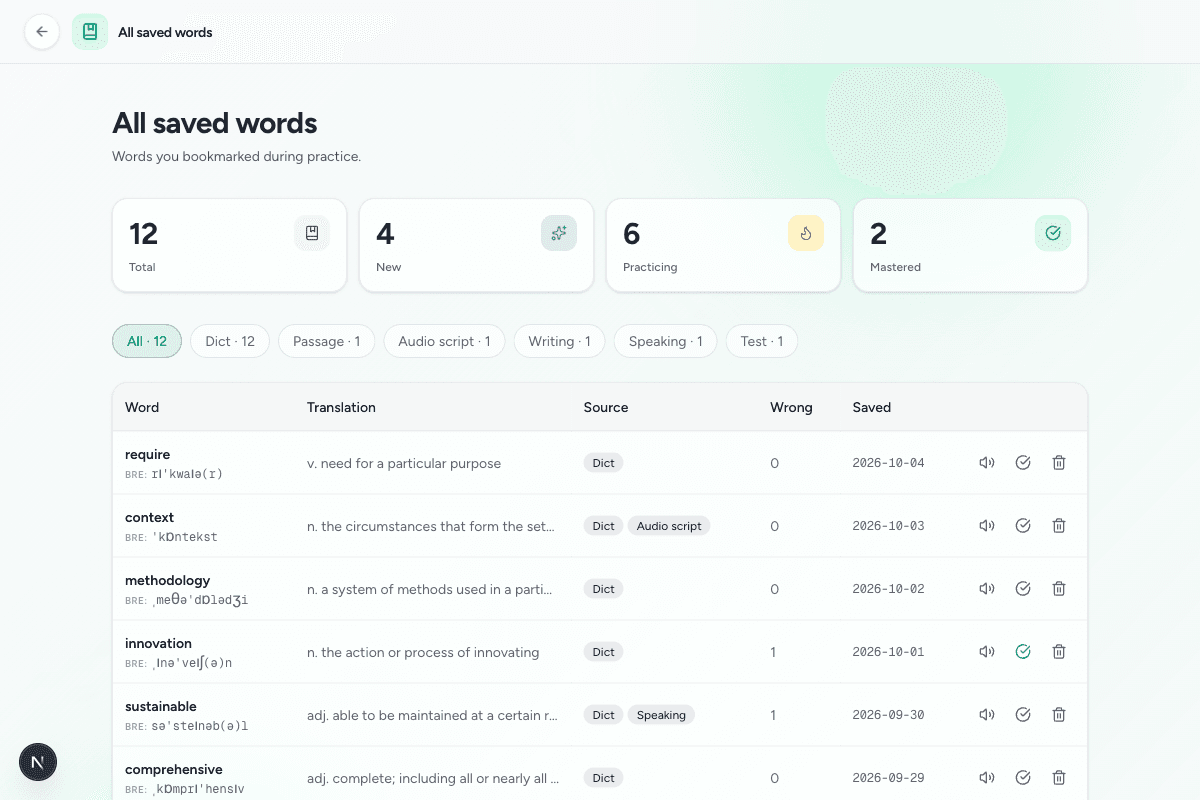
เรียกดูรายการคำ
เรียนคำศัพท์วิชาการพร้อมนิยาม ตัวอย่าง และหมายเหตุการใช้เฉพาะ IELTS
- โฟกัสคำที่เกี่ยวข้องกับหัวข้อเป้าหมาย
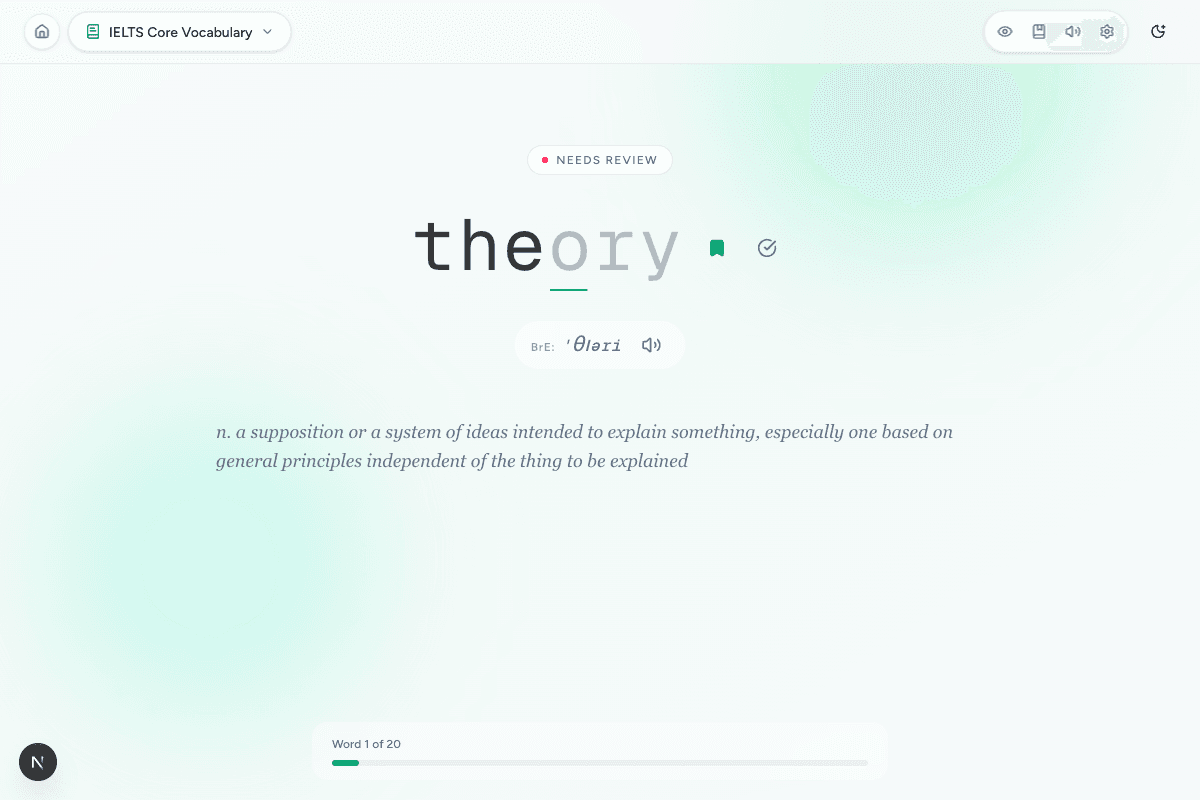
ทำควิซ
ทดสอบความรู้ด้วยควิซจับคู่ที่เสริมความหมายและการใช้งาน
- ทบทวนคำตอบผิดทันที
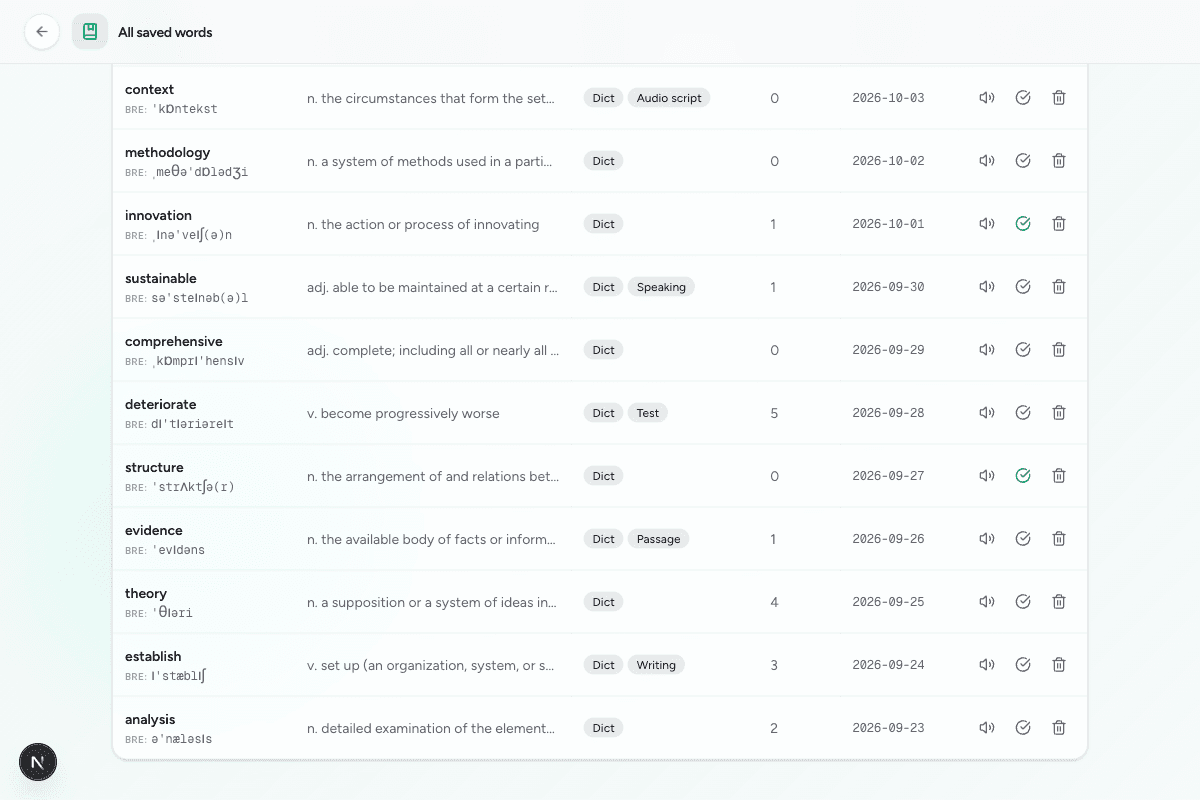
ติดตามการทบทวนแบบเว้นระยะ
คำที่ผิดจะปรากฏบ่อยขึ้น ส่วนคำที่รู้แล้วจะเว้นระยะนานขึ้น
- ฝึกทุกวันเพื่อจำได้ดีที่สุด
แหล่งข้อมูล IELTS อย่างเป็นทางการ
ข้อมูลรูปแบบการสอบในหน้านี้ตรวจสอบกับแหล่งข้อมูล IELTS อย่างเป็นทางการแล้ว ตรวจสอบเมื่อ 2026-09-05