
IELTS 어휘이 중요한 이유
어휘는 IELTS 쓰기와 말하기 점수의 25%를 차지합니다. 강력한 어휘력은 아이디어를 정확하게 표현하고, 반복을 피하고, 밴드 7 이상에 필요한 학술적 언어 기술을 보여주는 데 도움이 됩니다.
학술 단어 목록
학술 단어 목록(AWL)은 학술 텍스트에서 자주 나타나는 570개의 단어군을 포함합니다. 이러한 단어를 마스터하면 읽기 이해와 쓰기의 정교함이 크게 향상됩니다.
학습할 상위 학술 단어군
학습 팁
- • 단일 단어 대신 단어군 학습
- • 분리된 단어 대신 맥락에서 학습
- • 문장에서 단어 사용 연습
- • 간격 반복으로 정기적으로 검토
필수 주제 영역
IELTS은 다양한 주제를 다룹니다. 주요 주제 영역에서 어휘를 구축하세요:
교육
curriculum, assessment, pedagogy, methodology, academic achievement, lifelong learning
환경
sustainability, conservation, biodiversity, renewable energy, climate change, ecological footprint
기술
innovation, artificial intelligence, digital transformation, cybersecurity, automation, technological advancement
건강
healthcare, medical treatment, prevention, diagnosis, public health, mental wellbeing
사회와 문화
social cohesion, cultural diversity, demographic change, urbanization, globalization, social welfare
콜로케이션 및 구문
콜로케이션은 자연스럽게 함께 나타나는 단어입니다. 이를 사용하면 영어가 더 자연스럽고 정교하게 들립니다.
동사 + 명사 콜로케이션
형용사 + 명사 콜로케이션
학술 구문
밴드 7+ 동의어
동의어를 사용하여 반복을 피하세요. 이러한 대안은 언어를 향상시킵니다:
일반 표현에서 학술적 표현으로
학습 전략
효과적인 어휘 학습은 체계적인 접근이 필요합니다:
맥락에서 학습
분리된 단어 대신 맥락에서 학습:
- 학술 기사 읽기 및 새 단어 노트 필기
- 정의 대신 예제 문장 학습
- 아이디어와 연결되는 방법 학습
- 실제 상황에서 단어 사용 연습
간격 반복
증가하는 간격으로 단어 검토:
- 1일, 3일, 1주, 2주 후 새 단어 검토
- 플래시카드 또는 어휘 앱 사용
- 정기적으로 자기 테스트
- 어려운 단어에 집중
능동적 사용
능동적으로 사용하여 유지:
- 새 단어로 문장 작성
- 새 어휘로 말하기 연습
- 연결을 보여주기 위해 어휘 웹 만들기
- 다른 사람에게 단어 가르치기
일반적인 실수
이러한 어휘 함정을 피하세요:
잘못된 단어 사용
완전히 이해하지 못한 단어를 사용하지 마세요. 사용하기 전에 사용법과 콜로케이션 확인
과도한 복잡한 단어 사용
복잡한 단어가 항상 더 좋은 것은 아닙니다. 맥락에 적합한 단어 사용
단어 형태 무시
유연한 사용을 위해 단어군(명사, 동사, 형용사, 부사) 학습
콜로케이션 학습 안 함
단어는 분리되어 존재하지 않습니다. 자연스럽게 함께 나타나는 단어 학습
AI 피드백 이점
LingoForge의 AI 어휘 연습은 즉각적이고 개인화된 피드백을 제공합니다:
즉각적인 채점
상세한 설명과 함께 어휘 사용에 대한 즉각적인 피드백
오류 분석
어휘 간격 식별 및 개선 제안
연습 방법
LingoForge로 IELTS 어휘를 연습하는 방법
단어 목록에서 습득까지 3단계.
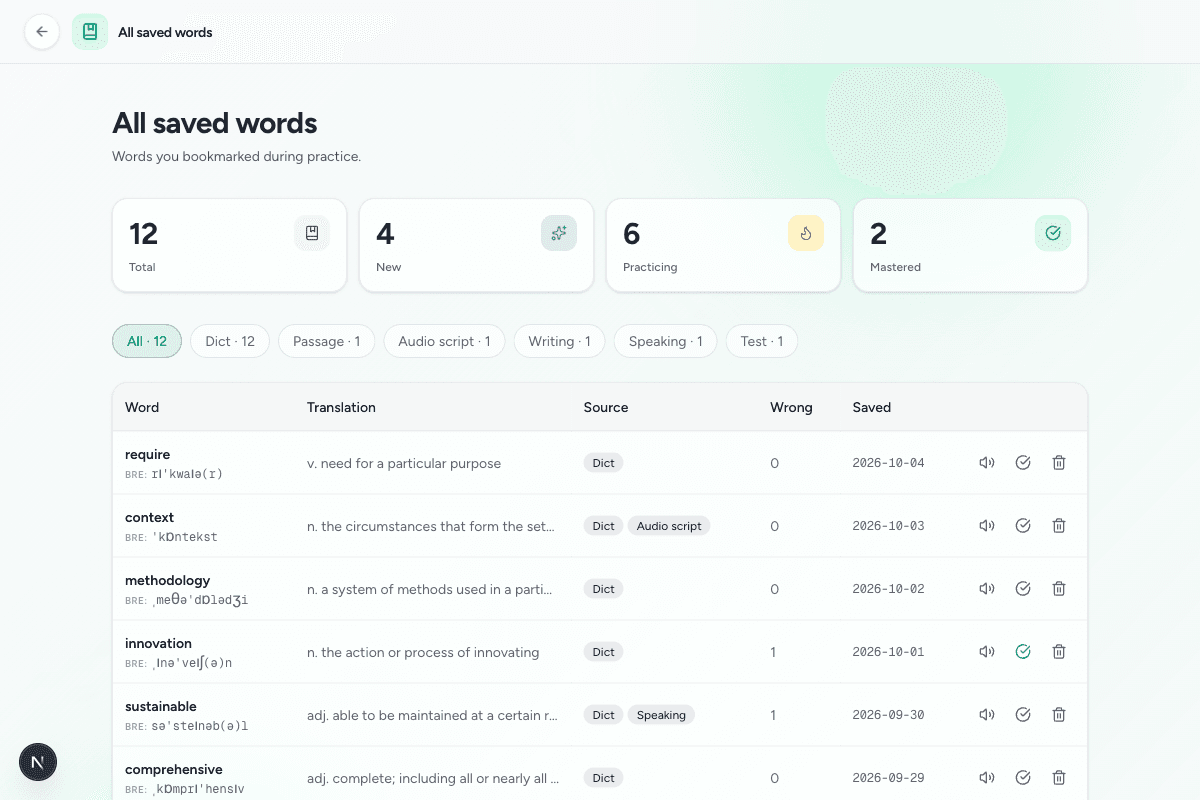
단어 목록 탐색
정의, 예문, IELTS 특정 용법 설명과 함께 아카데믹 단어를 학습하세요.
- 목표 토픽 관련 단어에 집중
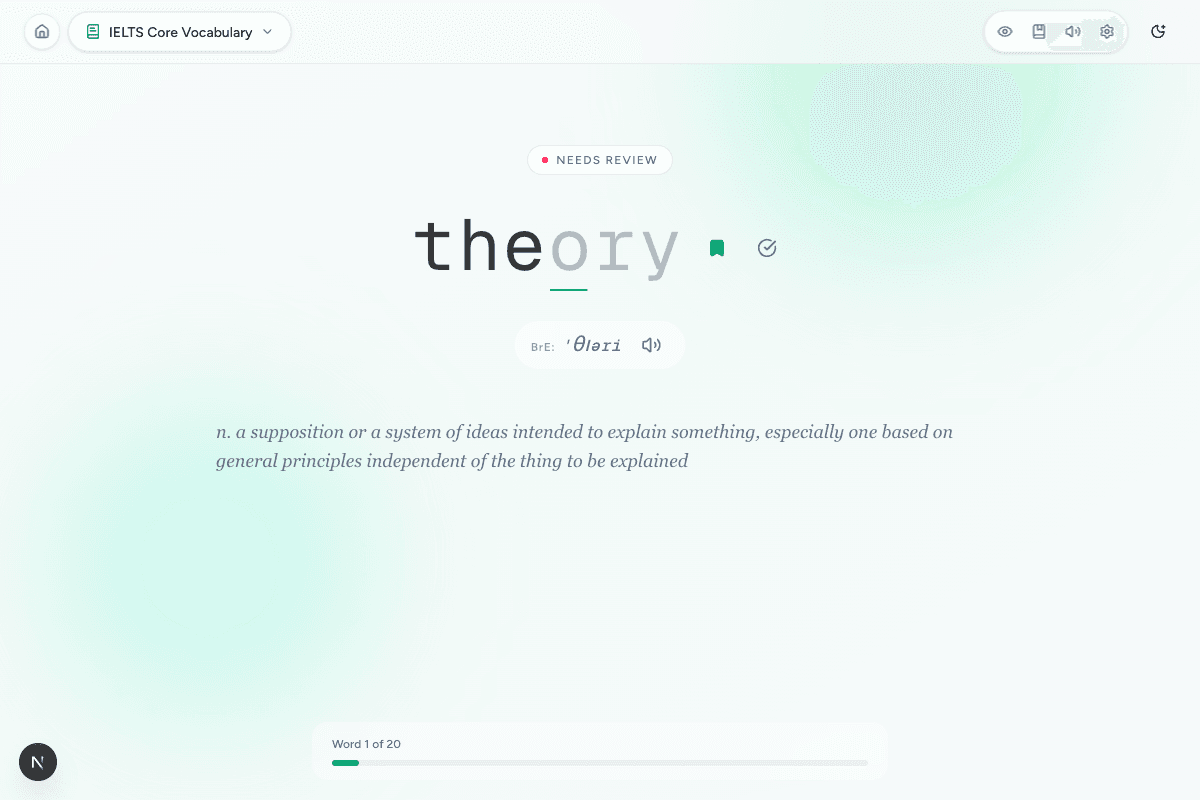
퀴즈 응시
매칭 퀴즈로 지식을 테스트하고 의미와 용법을 강화하세요.
- 틀린 답을 즉시 복습
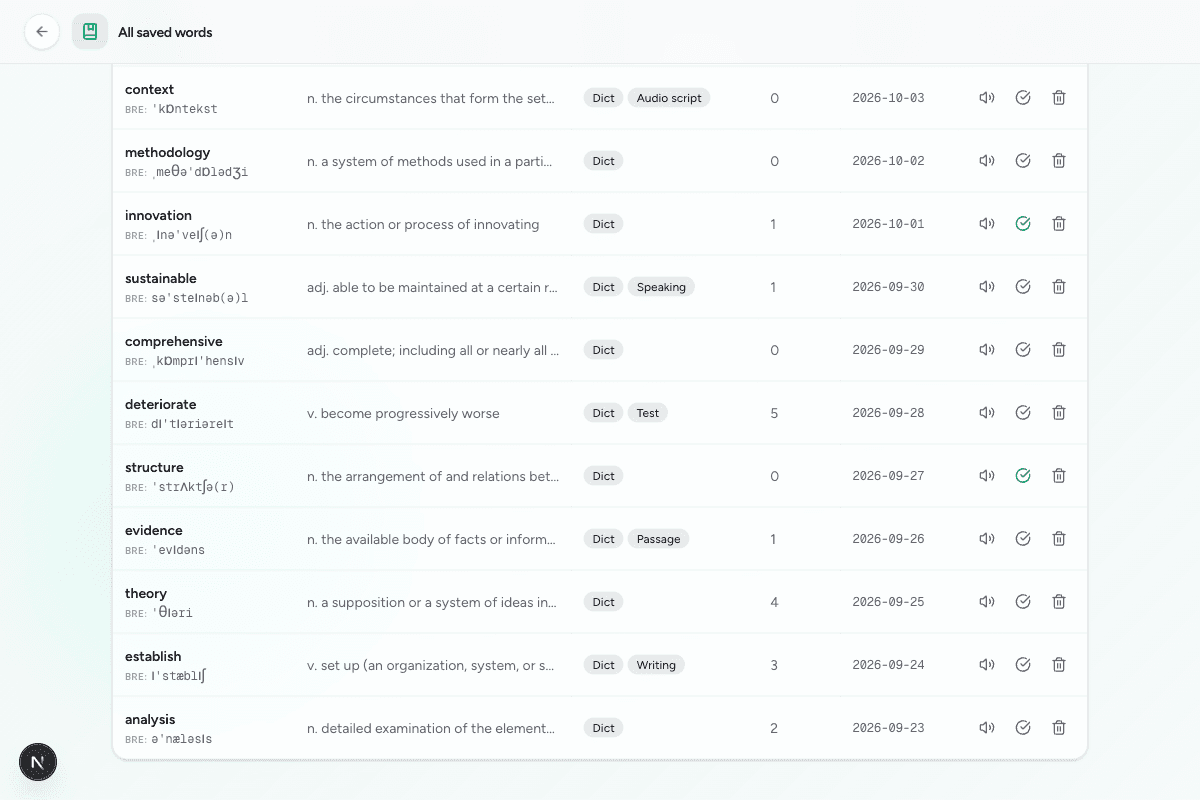
간격 반복 추적
틀린 단어가 더 자주 등장하고, 알고 있는 단어는 더 긴 간격으로 이동합니다.
- 최상의 암기를 위해 매일 연습
공식 IELTS 자료
이 페이지의 시험 형식 정보는 공식 IELTS 자료로 확인했습니다. 확인일: 2026-09-05.