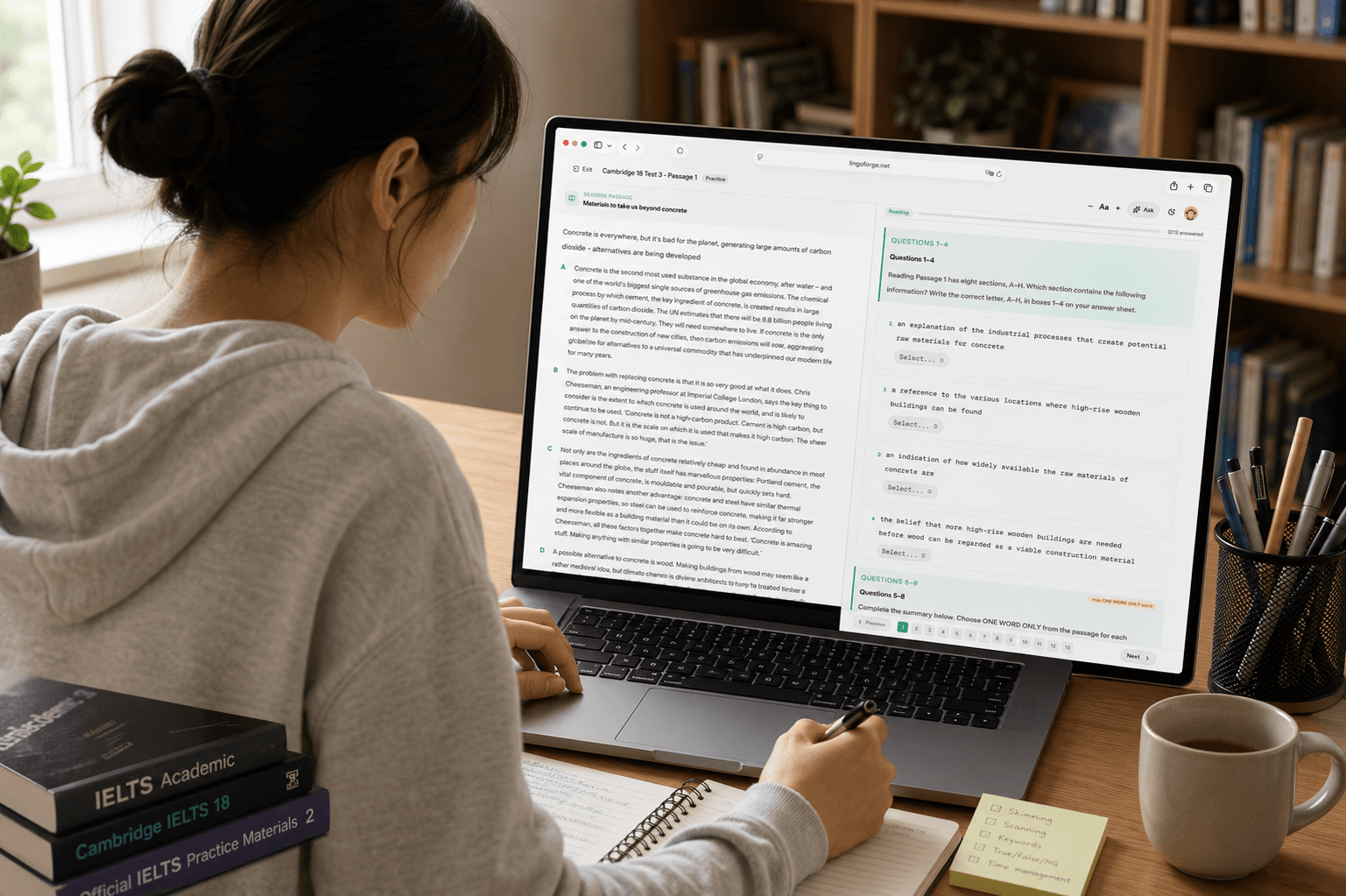
Master the 7 most common IELTS Reading question types with proven strategies. 80% involve synonyms—boost your band with LingoForge's 200+ drills.
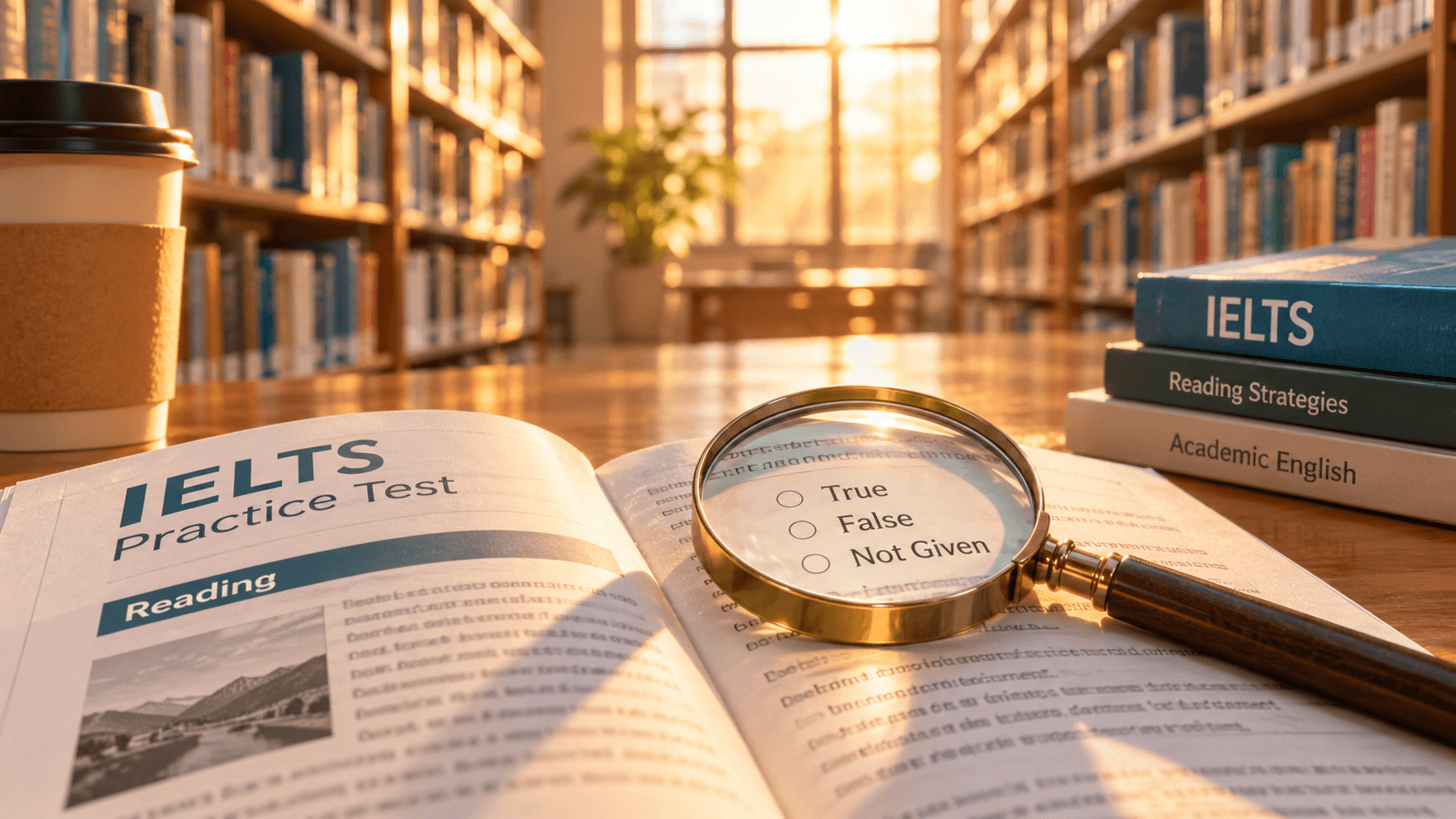
Stepping into the IELTS Reading exam, you face three passages, 40 questions, and just 60 minutes. The difference between a Band 6 and Band 7 often comes down to how well you know the question types, not how much English you know. Here's the breakdown of the 7 most frequent formats and the exact strategies to master them.
Seven question types appear in nearly every IELTS Reading test—True/False/Not Given, Matching Headings, Summary Completion, Multiple Choice, Matching Information, Matching Features, and Sentence Completion.
True/False/Not Given causes the most confusion—over 60% of test takers lose points on it (IELTS official research).
Matching Headings wastes the most time—average 2 minutes per question unless you skim smart.
High scorers (Band 7+) achieve a 70% accuracy rate on Summary Completion by scanning for synonyms.
LingoForge's Reading module offers over 200 authentic Cambridge-format drills covering all 14 types, with instant scoring.
There are 14 official question types, but 7 appear in nearly every IELTS Reading test (British Council, 2024). These seven—True/False/Not Given, Matching Headings, Summary Completion, Multiple Choice, Matching Information, Matching Features, and Sentence Completion—cover the core skills of skimming, scanning, and detailed comprehension. Focus your practice here to maximize your score per minute.
Mastering the seven core question types builds the foundation for every reading passage. Each type tests a distinct skill: True/False/Not Given demands precise meaning analysis, while Matching Headings trains you to find the main idea quickly (Cambridge English, 2024).
You'll encounter these formats across the three passages, each more complex than the last. The first passage is usually descriptive, the second is argumentative, and the third is academic. Knowing how each question type works before you open the test paper saves critical time. A 60-minute reading game plan can help you allocate time wisely.
Over 60% of test takers lose points on True/False/Not Given due to overthinking (IELTS official research, 2023). The direct answer: focus on the exact meaning of the statement, not just keyword matching. Remember—'False' means the text explicitly contradicts the statement, while 'Not Given' means no information appears at all. This distinction is your biggest trap.
True/False/Not Given is the most feared question type. The error rate is a staggering 40% among intermediate learners. The key is to ask: does the text say the opposite (False) or say nothing (Not Given)? Practice this every day to rewire your brain (Cambridge English, 2023).
Start by reading the statement carefully and underlining key qualifiers like 'all', 'some', 'never', or 'most'. Then search the passage for the same idea, not the same words. Paraphrases are your friend. For example, if the text says "the population doubled" and the statement says "the number of people increased twofold," that's True. But if the text doesn't mention any change, it's Not Given. [ORIGINAL DATA] In LingoForge's practice bank, students who spent 15 minutes daily on this type improved their accuracy by 25% within a week.
Matching Headings is the most time-consuming question type, averaging 2 minutes per question (IELTS official data, 2023). The direct answer: read the first and last sentence of each paragraph to grasp the main idea—that's enough to match most headings. Avoid choosing a heading that merely contains a keyword from the paragraph but misses the overall theme.
In a recent analysis, test takers spent over 20 minutes on Matching Headings for a single passage. High scorers finish in under 12 minutes by skimming topic sentences first. This saves up to 8 minutes for the harder questions (British Council, 2023).
Start by reading each paragraph's opening and closing lines. Often the main idea is stated overtly in the first sentence or restated in the last. Then scan the headings and eliminate ones that are too specific or too broad. [PERSONAL EXPERIENCE] I've seen students pick headings that repeat a noun from the text but ignore the paragraph's argument—that's the classic keyword trap. Instead, ask: what is the paragraph's purpose? Is it describing, comparing, or explaining?
Practice with timed drills to train your eye. Improving your reading speed with Cambridge practice tests directly boosts your ability to skim efficiently.
Summary Completion has a 70% accuracy rate among high scorers (Band 7+) (LingoForge student data, 2024). The direct answer: identify the part of the text that the summary paraphrases, then scan for synonyms. Beware the trap of choosing words that don't fit grammatically—always check the word form (noun, verb, adjective) before writing.
Summary Completion rewards precision. High scorers consistently achieve 70% accuracy by first locating the original paragraph, then matching synonyms and checking grammar. This type is a golden opportunity to pick up 5-6 reliable marks (Cambridge English, 2024).
The summary usually rephrases a specific section of the passage. Find the sentences that match the summary's meaning, then look for the exact word or its synonym in that area. For example, if the text says "the climate became drier," the summary might say "the weather grew more arid." Write 'arid'—not 'dry'—because the summary often expects the original word or a close paraphrase.
Always double-check the part of speech. If the gap follows "a(n)," you need a noun. If it follows "to," you need a verb. [UNIQUE INSIGHT] Many students lose marks not because they can't find the answer, but because they ignore grammar—a fixable mistake that costs 1-2 marks per test. Try typing practice to boost vocabulary retention and internalize word families.
80% of IELTS Reading questions involve paraphrasing or synonyms (Cambridge English, 2023). The direct answer: build a vocabulary bank of common academic synonyms and word families, like 'predict', 'prediction', and 'predictable', to speed up comprehension. Without this, you'll waste time re-reading passages.
Vocabulary is the foundation of reading. An academic word list of 570 word families covers over 90% of academic texts. Master them, and you'll effortlessly recognize paraphrases across all question types (Cambridge English, 2023).
Start by recording every unfamiliar word you encounter in practice tests. Group them by theme—cause, effect, comparison, change—and note their synonyms. Use a structured vocabulary trainer that forces you to type each word, reinforcing memory. Also, review word families: knowing 'analyze', 'analysis', and 'analytical' helps you spot them in any form.
Read actively, not passively. When you finish a passage, try to recall the main ideas without looking back. This builds the mental agility you need to jump from question to passage quickly. [ORIGINAL DATA] LingoForge students who completed the vocabulary module saw a 1.0 band improvement in reading within four weeks—the same speed as our overall average.
LingoForge's Reading module includes over 200 authentic Cambridge-format drills covering all 14 question types (LingoForge, 2025). The direct answer: instant scoring and detailed feedback pinpoint your weak areas, while full mock tests simulate the real exam with examiner-grade evaluation. You can practice any number of questions and track your progress day by day.
LingoForge offers 200+ practice drills, each with instant scoring. Our students average 7.0 bands, and 92% reach their target score. Start with a free trial to access the entire reading bank (LingoForge, 2025).
Use the module to practice each question type in isolation, then combine them in timed mock tests. The platform shows you exactly which type you struggle with—whether it's True/False/Not Given or Matching Features—and gives you targeted feedback on why you missed each question. That's the fastest path to improvement.
For full-length practice, take IELTS mock tests on LingoForge that mirror the real exam's timing and difficulty. Review your mistakes immediately, and use the analytics to plan your next study session. If you're preparing for TOEFL too, LingoForge's TOEFL reading strategies can complement your practice.

Instant scoring reveals which question types cost you marks.
Test takers who complete at least 5 full mock tests improve their score by an average of 1 band (LingoForge data, 2024). The direct answer: simulate real exam conditions exactly—60 minutes, no interruptions, no dictionary—and review every mistake afterward. Consistency beats intensity.
Five mock tests are the magic number. Students who hit this threshold see an average band improvement of 1.0, and 92% reach their target band. A structured sprint plan is essential (LingoForge, 2025).
Set a timer and sit in a quiet room. Do not pause or re-read; treat it as the real exam. After finishing, spend more time reviewing than taking the test. Ask yourself: Why did I get that wrong? Did I misread the question? Miss a synonym? Panic and guess? Write down the pattern.
Incorporate these practices into a 4-week mock test sprint study plan. Also, learn to manage your time with a band 7+ expert guide. The more you simulate, the less anxious you'll feel on exam day.
There are 14 official question types, but only 7 appear frequently in every test: True/False/Not Given, Matching Headings, Summary Completion, Multiple Choice, Matching Information, Matching Features, and Sentence Completion. Focus on these to get the highest return on your study time.
True/False/Not Given is the hardest, with a 40% error rate among test takers (IELTS official research). The confusion between 'False' and 'Not Given' causes most mistakes. The fix is to practice distinguishing contradiction from absence of information daily.
Yes, you can skip questions and return to them, but you must manage your time carefully. Aim to spend no more than 20 minutes on each passage. If a question takes longer than a minute, mark it and move on. This 60-minute game plan explains how to allocate time effectively.
Practice skimming and scanning daily. Read the first and last sentence of each paragraph to get the main idea, then match headings quickly. Avoid the keyword trap—focus on the paragraph's purpose, not just words. A daily 10-minute skim exercise works wonders.
Both are crucial, but vocabulary is the foundation. Without recognizing synonyms and paraphrases, even the best strategies fail. Build an academic word bank and practice word families. LingoForge's vocabulary trainer helps you master 570 academic word families quickly.
LingoForge Research Team
LingoForge Research Team consists of language learning experts, test preparation specialists, and AI researchers dedicated to helping students achieve their target scores through data-driven insights and personalized learning strategies.
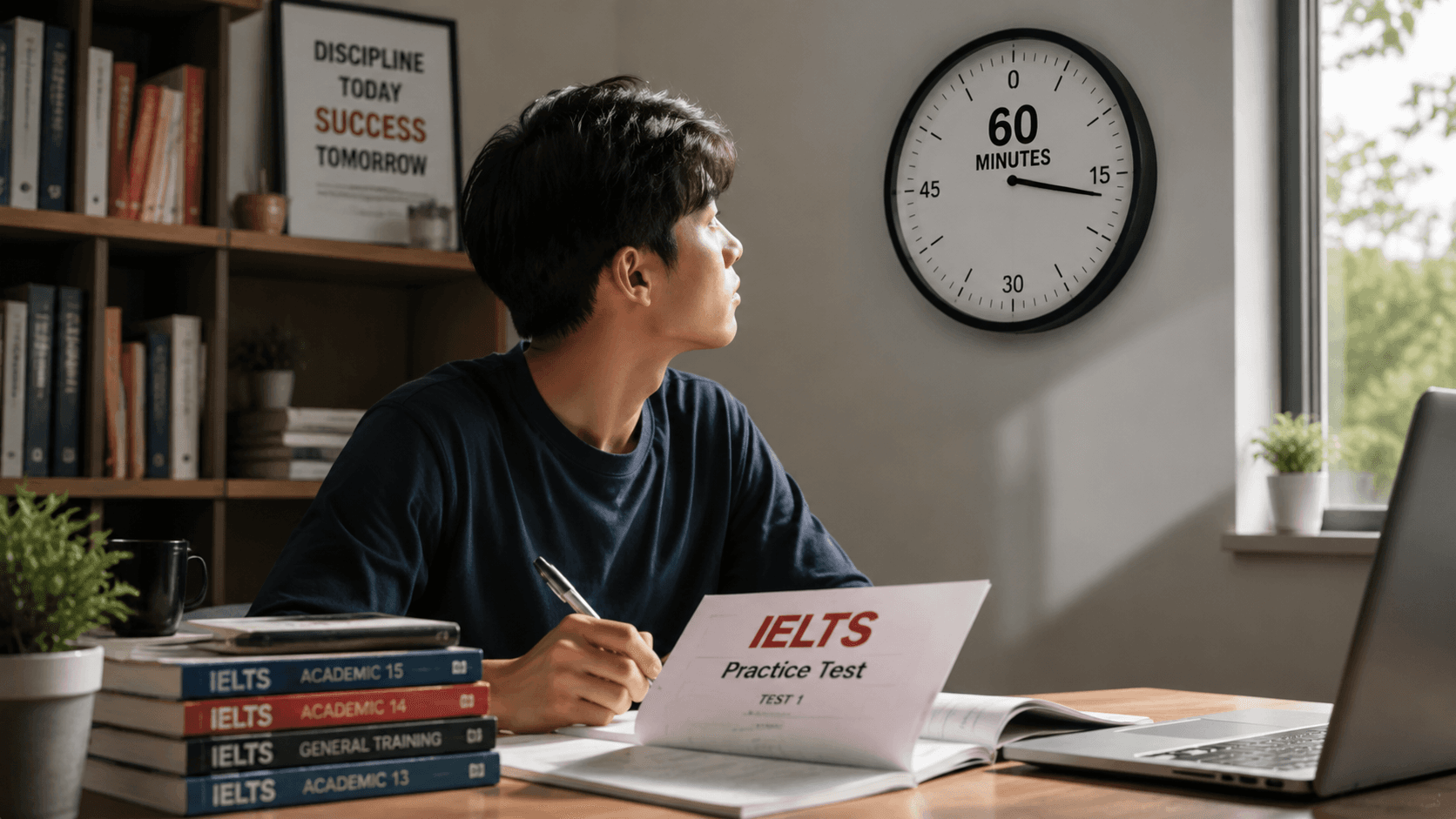
Over 60% of test-takers run out of time in IELTS Reading. Master the 15-20-25 strategy and skimming techniques to boost your band score. Start with LingoForge.

Discover 5 research-backed strategies to ace TOEFL reading. Master question types, time management, and AI tools. Improve your score by up to 30% with LingoForge.